Comparisons
Statuario vs Calacatta Marble: How to Tell Them Apart
2 February 2026 · 2 min read
Both are luxury white Italian marbles. Calacatta has a warmer white background with bold, dramatic grey-gold veining and more open space between veins. Statuario has a brighter, cooler white with finer, more uniform grey veining. Calacatta reads as opulent; Statuario reads as crisp and classical.
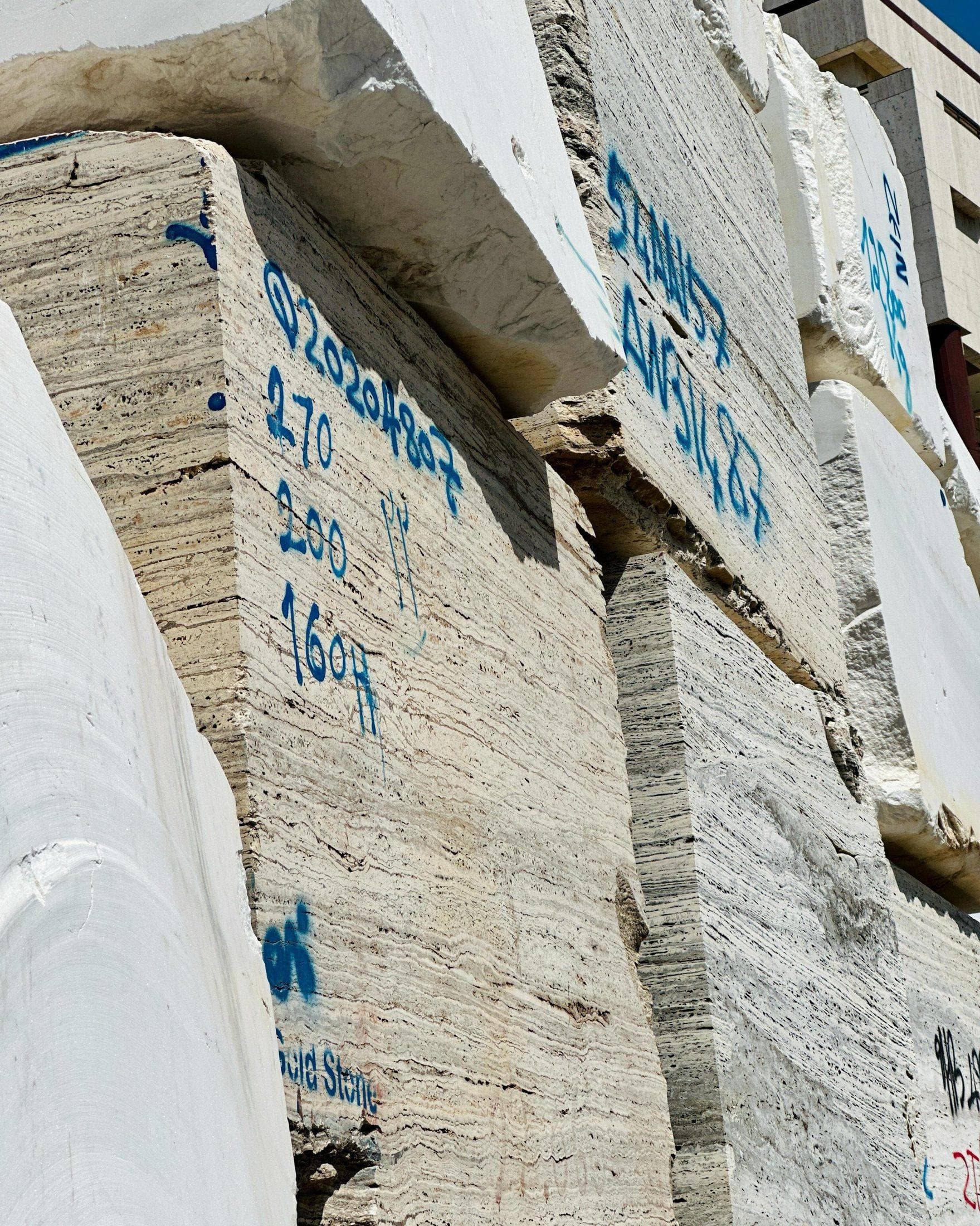
Statuario and Calacatta are two of the most coveted white marbles in the world, both quarried in the Apuan Alps near Carrara in Italy. They are often confused — and often mislabelled — but once you know what to look for, telling them apart becomes easy. The difference is all in the background colour and the character of the veining.
Calacatta marble: warm and dramatic
Calacatta has a warmer, slightly creamy white background and bold, thick veins that often run gold, brown and deep grey. The veining is dramatic and sparse, with generous open white space between the veins. The result feels opulent and architectural — a stone that makes a statement on a feature wall, an island or a book-matched panel. Calacatta is rarer than Carrara, which is part of why it commands a premium.
Statuario marble: bright and classical
Statuario has a brighter, cooler, more uniformly white background with finer, more consistent grey veining. It is the marble of classical sculpture — luminous and refined rather than theatrical. Because the veining is more even, Statuario reads as calm and timeless, which makes it a favourite for bathrooms, floors and surfaces where you want luxury without drama.
Statuario vs Calacatta: side by side
- Background: Calacatta is warmer/creamier white; Statuario is brighter, cooler white.
- Veining: Calacatta has bold, thick, gold-grey veins with open space; Statuario has finer, more uniform grey veins.
- Character: Calacatta is dramatic and opulent; Statuario is crisp and classical.
- Rarity: Both are premium and rarer than Carrara; top Calacatta blocks are especially scarce.
- Best for: Calacatta for statement walls and islands; Statuario for serene bathrooms, floors and timeless surfaces.
A quick note on Carrara, the third name people mix in: Carrara has a softer grey-white background with feathery, lighter-grey veining. It is more abundant and more affordable, and a beautiful stone in its own right — just less dramatic than either Calacatta or Statuario.
How to choose
Choose Calacatta when you want one surface to be the centrepiece — a kitchen island, a fireplace, a book-matched wall. Choose Statuario when you want luxury that stays quiet and lets the room breathe. Whichever you prefer, always select your slab in person: natural marble varies block to block, and the slab you stand in front of is the one you should buy.
We keep white Italian marbles in our Beirut showroom as full slabs, so you can compare Calacatta and Statuario in the same light. Explore the marble collection or talk to our design team about which suits your space.
Frequently asked
- Is Calacatta or Statuario more expensive?
- Both are premium marbles. Top-grade Calacatta with bold gold veining is often the most expensive because the best blocks are very rare, but price depends heavily on the specific slab and grade.
- What is the easiest way to tell Statuario from Calacatta?
- Look at the background and veins. Calacatta has a warmer white with bold, widely spaced gold-grey veining; Statuario has a brighter, cooler white with finer, more even grey veining.
- Is Calacatta the same as Carrara?
- No. Carrara has a softer grey-white background with light, feathery veining and is more common and affordable. Calacatta is whiter with bolder, more dramatic veins and is rarer.
- Can these marbles be used in kitchens?
- Yes, with care. Like all marble they should be sealed and cleaned with pH-neutral products, and acidic spills wiped quickly. Many owners embrace the way marble develops a lived-in patina over time.
See it in the showroom.
Browse over a hundred natural stones as full slabs in Beirut, or ask our team for guidance on your project.
Keep reading