Comparisons
Best Kitchen Backsplash Materials: Marble, Granite, Quartz & More
24 March 2026 · 6 min read
The best kitchen backsplash material depends on how you cook and the look you want. Porcelain and quartz are non-porous and low-maintenance; granite is hard and heat-tolerant; marble is the most beautiful but is porous and etches with acids, so it needs sealing and care. There is no single winner — only the right stone for your kitchen.
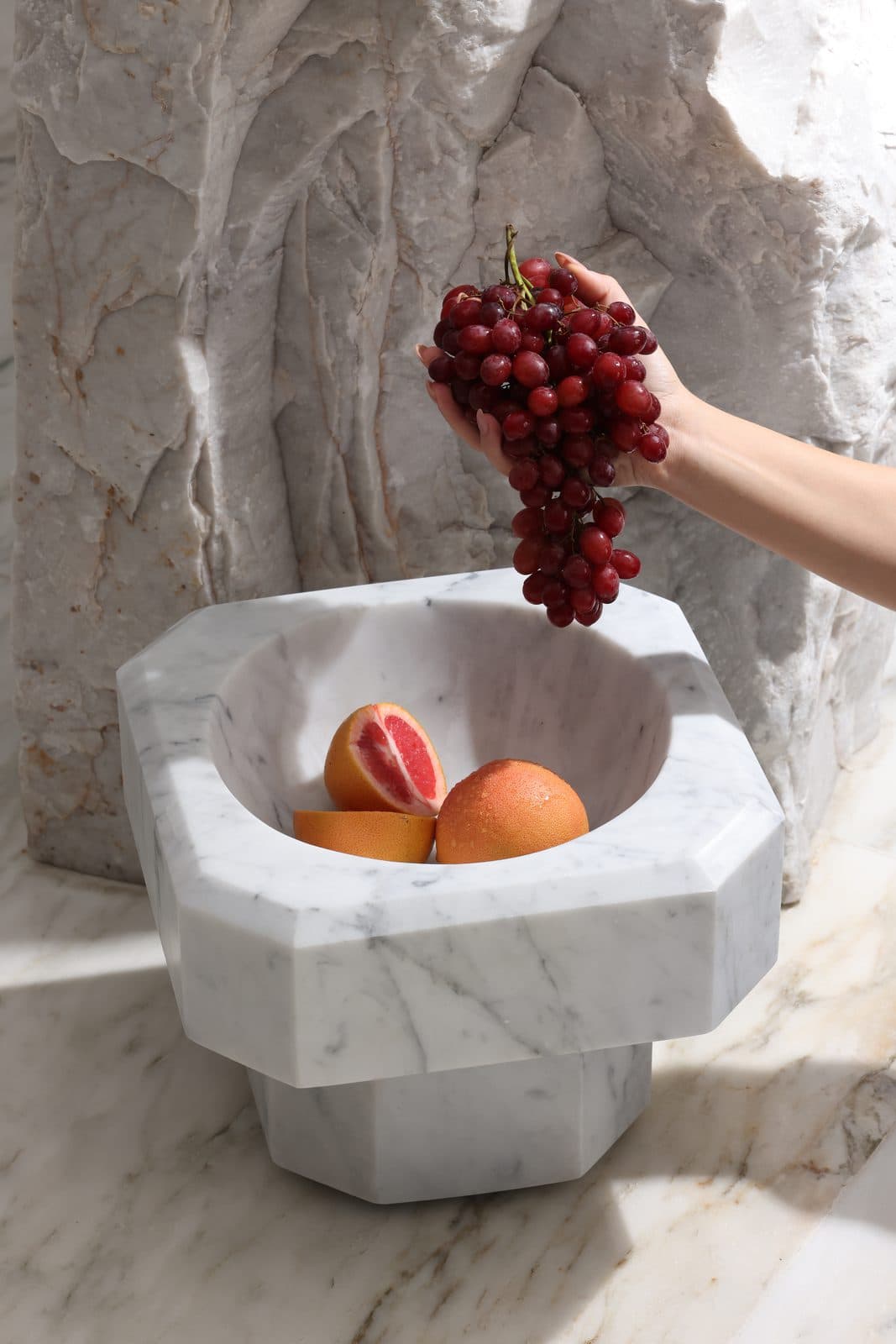
At Zein Marble we have worked with natural stone in Beirut since 1989, and the kitchen backsplash is one of the questions we are asked about most. It is a small surface that does a lot of work: it protects the wall behind your hob and sink, and it sets the tone for the whole room. Choosing the right material is about balancing how it looks, how it performs and how much care you are willing to give it.
This guide explains the most common backsplash materials in plain terms — what each one really is, its honest pros and cons, and how to decide between them.
What makes a good kitchen backsplash material?
Before choosing a material, weigh it against a few practical factors:
- Porosity and stain resistance — how easily it absorbs water, oil and sauces.
- Heat tolerance — how it behaves near a hob or oven.
- Maintenance — whether it needs sealing and what you can safely clean it with.
- Durability — how it stands up to knocks, scratches and daily use.
- Aesthetics — how it sits with your countertops, cabinets and lighting.
A well-chosen backsplash does more than look good: it is easy to keep clean, lasts for years and lifts the value of the kitchen.
The main backsplash materials, compared
Ceramic tile — affordable and versatile
Ceramic tiles are made from fired clay and remain one of the most popular backsplash choices. They come in an enormous range of colours, shapes and finishes.
Advantages:
- Cost-effective, even for large runs of wall
- Huge variety of colours, textures and patterns
- Glazed surfaces wipe clean easily
Limitations:
- Can chip or crack under a sharp impact
- Grout lines need cleaning and can stain over time
- Reads as less premium than natural stone
Best for: budget-conscious kitchens that want plenty of design flexibility.
Porcelain tile — durable and low-maintenance
Porcelain is a denser, more refined cousin of ceramic, fired at higher temperatures so it absorbs very little water. Large-format porcelain slabs can even mimic the look of marble while behaving like a hard-wearing tile.
Advantages:
- Hard-wearing and tolerant of heat
- Resistant to stains, scratches and moisture
- Low maintenance — no sealing required
Limitations:
- Higher material and installation cost than ceramic
- Large slabs need professional cutting and fitting
Best for: busy, modern kitchens that want a long lifespan with minimal upkeep.
Glass tile — sleek and reflective
Glass backsplashes suit contemporary interiors and bounce light around the room.
Advantages:
- Reflects light, making a kitchen feel brighter and larger
- Non-porous, so it resists stains and is very hygienic
- Wipes clean in seconds
Limitations:
- Can chip or crack at the edges if struck
- More expensive than basic ceramic
- Shows smudges and fingerprints readily
Best for: minimalist or modern kitchens that want brightness and a seamless feel.
Granite — hard and heat-tolerant
Granite is an igneous rock, formed as molten material cooled and crystallised deep underground. That origin makes it one of the hardest natural stones used in kitchens, with a speckled, granular look very different from the flowing veins of marble.
Advantages:
- Very hard and scratch-resistant
- Tolerates heat well
- Each slab is unique, with rich natural colour
Limitations:
- Porous, so it should be sealed to resist staining
- Heavy — needs solid fixing and professional installation
Best for: hard-working kitchens that want a durable natural stone with strong character.
Quartz — engineered and consistent
Quartz countertops and backsplashes are not solid natural stone but an engineered material: crushed natural quartz bound with resins and pigments. That manufacturing gives it two qualities natural stone cannot match — it is non-porous and its pattern is highly consistent from slab to slab.
Advantages:
- Non-porous, so it never needs sealing and resists stains
- Durable and consistent in colour and pattern
- Easy to keep clean and hygienic
Limitations:
- The resin binder is sensitive to high heat — keep hot pans away
- The look is more uniform and less natural than real stone
Best for: practical, low-maintenance kitchens that prefer a uniform, predictable finish.
Marble — luxury with character
Marble is a metamorphic rock formed when limestone recrystallises under heat and pressure, producing the soft veining that has defined luxury interiors for centuries. It is unmatched for beauty — but it is important to be honest about how it behaves. Marble is a calcite-based stone, which means it is porous and will etch if acids such as lemon, vinegar or wine sit on it. It is not heat-proof and is softer than granite or quartz.
Advantages:
- Unrivalled natural veining and timeless elegance
- Instantly elevates the look of a kitchen
- A genuine focal point that adds prestige
Limitations:
- Porous — needs sealing and pH-neutral cleaning
- Etches when it meets acids; can stain if spills are left
- Softer than granite or quartz, so it marks more easily
A backsplash is actually one of the safest places to enjoy marble in a kitchen: it sits on the wall, away from chopping and most spills, so you get the beauty with far less wear than a worktop would see. You can explore the full range in our marble collection.
Best for: premium homes, villas and statement kitchens where beauty leads.
How to choose the right backsplash
Match it with your countertops:
- A busy marble or granite worktop usually pairs best with a calmer backsplash
- A plain worktop can carry a bolder, more decorative backsplash
Be honest about maintenance:
- Lowest upkeep — porcelain, quartz or glass
- Most beautiful, with some care — marble
- Hard and natural — granite
Think about lighting. A backsplash changes character with the light around it. Warm lighting brings out the warmth and depth in marble; cooler lighting sharpens a modern, contemporary look. Always view a sample under the lighting you actually have at home.
Which backsplash should you choose?
There is no single best material — only the right one for your kitchen. As a quick guide:
- Budget-friendly: ceramic tile
- Lowest maintenance: porcelain or quartz
- Bright and contemporary: glass
- Hard-wearing natural stone: granite
- Luxury and lasting character: marble
At Zein Marble we cut and finish natural stone slabs for kitchens across Lebanon, and we are happy to talk through the trade-offs honestly. Visit our Beirut showroom to see full slabs side by side, or contact us to discuss the right material for your project.
Frequently asked
- Is marble a good kitchen backsplash material?
- Yes, with realistic expectations. Marble is porous and etches when it meets acids such as lemon or vinegar, so it needs sealing and gentle, pH-neutral cleaning. A backsplash is actually a kind place for marble because it sits on the wall, away from most chopping and spills — so you enjoy the beauty with far less wear than a worktop would see.
- What is the difference between quartz and granite?
- Granite is solid natural stone — an igneous rock that is very hard and tolerates heat, but is porous and should be sealed. Quartz is an engineered material made from crushed quartz bound with resin, so it is non-porous and never needs sealing, though its resin binder can be damaged by very high heat.
- Which backsplash material is the easiest to maintain?
- Non-porous materials are the lowest-maintenance: porcelain, quartz and glass all resist stains and wipe clean without sealing. Natural stones such as marble and granite are porous and should be sealed and cleaned with pH-neutral products.
- Can I put a backsplash behind my hob or stove?
- Yes — that is one of its main purposes. Porcelain, glass and granite handle heat well. Marble and quartz are best kept clear of direct flame or very hot pans: marble can be marked by heat and quartz's resin binder is heat-sensitive.
See it in the showroom.
Browse over a hundred natural stones as full slabs in Beirut, or ask our team for guidance on your project.
Keep reading