Guides
Italian Marble Guide for Lebanon: Carrara, Calacatta & Statuario
1 May 2026 · 5 min read
Italian marble is metamorphic limestone quarried in the Apuan Alps above Carrara, Italy. The famous whites — Carrara, Calacatta and Statuario — are prized for fine grain, soft veining and a cool, luminous surface. For Lebanese homes and villas, genuine Italian marble brings timeless, architectural elegance to floors, walls, stairs and worktops.
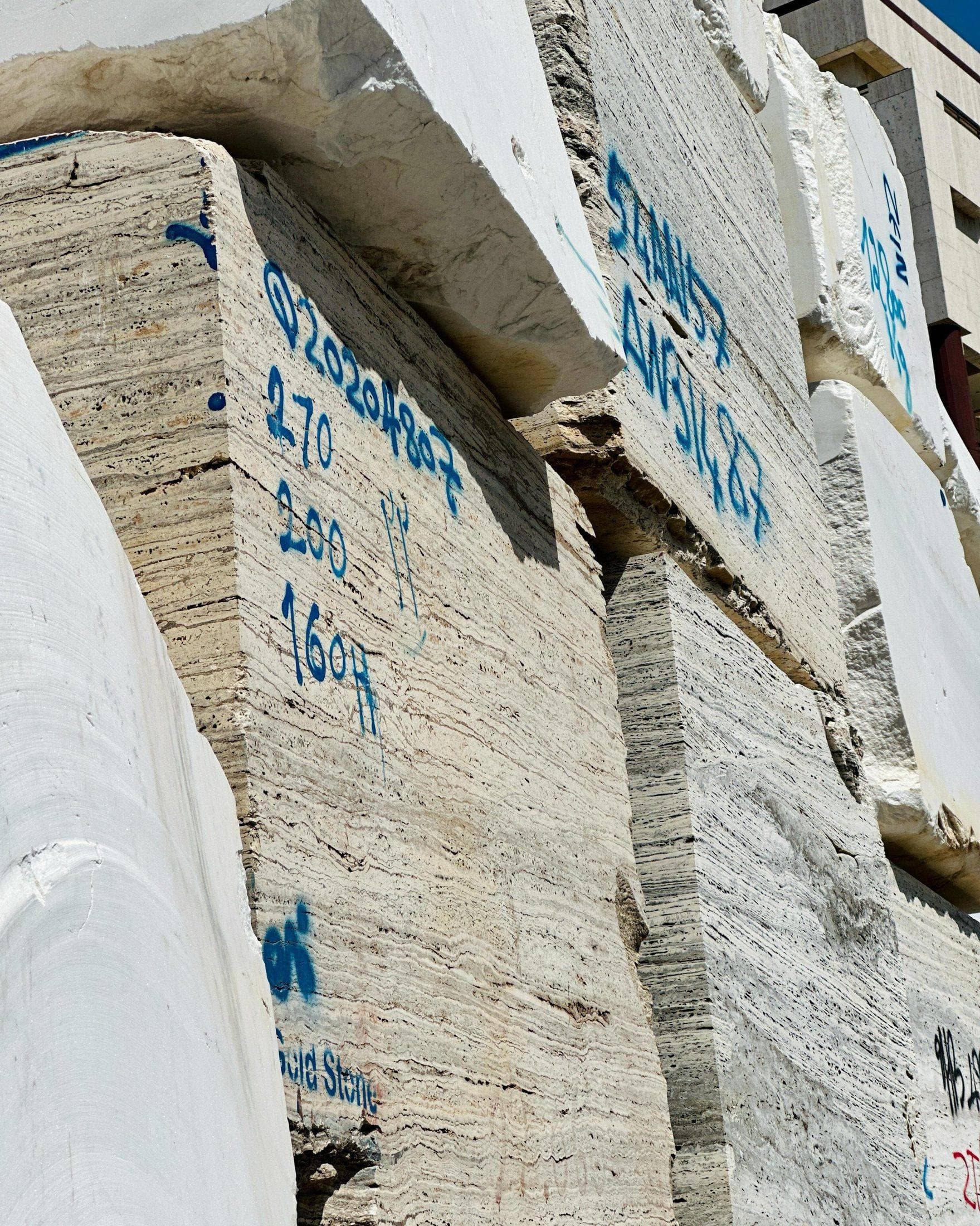
For centuries, Italian marble has been the standard against which all other stone is measured. The white marbles of Tuscany have clad cathedrals, lined palaces and given sculptors like Michelangelo their canvas. Today the same quarries supply the floors, walls and worktops of the world's finest homes — including villas and apartments across Beirut and Lebanon. This guide explains where Italian marble comes from, the famous varieties worth knowing, and how to recognise genuine quality before you buy.
What makes marble, and why Italian marble?
Marble is a metamorphic rock: limestone that has been recrystallised deep in the earth under heat and pressure. That process tightens the stone into a dense, often luminous material laced with veins of mineral colour. Italy's pre-eminence comes from geology and history together. The Apuan Alps, the mountains above the town of Carrara in northern Tuscany, hold some of the purest white marble on earth, and the region has quarried and worked it for more than two thousand years. The result is stone with an exceptionally fine, even grain and a craft tradition refined over generations.
The famous Italian marbles
Several names recur in any serious conversation about Italian stone. They are all white-to-grey marbles from the Carrara district, but each has its own character.
Carrara
The most familiar Italian marble of all. Carrara is a soft white to bluish-grey stone with fine, feathery grey veining that runs in soft drifts rather than bold lines. Because it is relatively abundant, it is the most accessible of the great Italian whites and a natural choice for floors, bathrooms and large surfaces where you want a calm, classic backdrop.
Calacatta
Often confused with Carrara but quite distinct. Calacatta has a whiter, brighter background and bolder, more dramatic veining, frequently in warm tones of gold, grey or brown. It is rarer than Carrara, and its striking pattern makes it a favourite for statement pieces — a kitchen island, a feature wall, or a book-matched panel where two mirrored slabs form a single image.
Statuario
Prized by sculptors and architects alike, Statuario is a brilliant white marble with crisp, well-defined grey veining and a slightly translucent quality that catches the light beautifully. It is one of the rarer and most sought-after Carrara marbles, ideal where you want purity and presence in equal measure.
Other Italian names to know
- Bianco Venato and similar veined whites — softer, everyday alternatives within the Carrara family.
- Botticino — a warm beige to cream marble from the Brescia region, classic for floors and traditional interiors.
- Bardiglio — an elegant grey Carrara marble, understated and architectural.
- Arabescato — a white marble with bold, interlacing grey veins, dramatic and unmistakable.
You can see how these whites and greys sit alongside the rest of our stone in our marble collection.
How to recognise genuine, quality Italian marble
Because the name carries a premium, it is worth knowing what genuine, well-selected marble looks like — and how to tell natural stone from printed imitations such as marble-effect tiles or engineered surfaces.
- Veining is never repeated. Real marble is a record of geology, so no two slabs are identical and the veins never repeat in a regular pattern. If you see the same vein printed across several tiles, it is not natural stone.
- Depth and translucency. Genuine marble has subtle depth — the surface seems to hold a little light rather than sitting on top like a print. Pale marbles such as Statuario take on a faint glow in good light.
- A cool, smooth touch. Natural marble feels cool and dense to the hand, with a fine, even grain rather than a plastic or perfectly uniform feel.
- Honest minor character. Natural stone may carry fine natural fissures or slight tonal variation; these are signs of authenticity, not defects, provided the slab is sound.
- Origin and consistency. A reputable supplier can tell you where a block was quarried and will let you see and select the actual slabs, so the colour and veining match across a project.
The single best safeguard is to buy from a trusted house and inspect full slabs in person rather than working from a small sample or a photograph. Marble is bought by the eye as much as by the name.
Using Italian marble in Lebanese homes
Italian marble suits the Lebanese way of building beautifully — the bright stone reads especially well in the strong Mediterranean light of Beirut homes and mountain villas. Carrara and Bardiglio make calm, timeless floors and stair treads. Calacatta and Statuario earn their place where they will be seen: a kitchen island, a bathroom vanity, a fireplace surround or an entrance hall. For worktops and high-traffic surfaces, marble should be properly sealed and cleaned with pH-neutral products, kept away from acidic spills such as lemon and vinegar that can etch the surface. Cared for this way, marble ages gracefully and only deepens in character.
Marble is bought with the eye. The name on the slab matters far less than the slab in front of you — its veining, its light, and the room it is destined for.
Choosing Italian marble in Beirut
Whether you are a homeowner, an architect or a builder, the right stone for a project is best chosen in person, full slab by full slab. At our Beirut showroom you can see Carrara, Calacatta, Statuario and the wider range of natural marbles side by side, hold them to the light, and select the exact slabs for your home. To discuss a specific room, villa or project, contact us and our team will help you match the right marble to how you will live with it.
Frequently asked
- Where does Italian marble come from?
- The famous white Italian marbles — Carrara, Calacatta and Statuario — are quarried in the Apuan Alps above the town of Carrara in northern Tuscany, Italy. The region has been quarrying and working marble for more than two thousand years.
- What is the difference between Carrara, Calacatta and Statuario?
- All three are white Carrara marbles. Carrara is soft white to grey with fine, feathery veining. Calacatta has a whiter background with bolder, often gold-toned veining and is rarer. Statuario is a brilliant white with crisp, well-defined grey veins and a slightly luminous quality, and is among the most sought-after.
- How can I tell genuine Italian marble from an imitation?
- Natural marble never repeats its veining, feels cool and dense to the touch, and holds subtle depth and light rather than looking like a flat print. Marble-effect tiles or engineered surfaces tend to repeat the same pattern. The surest way is to inspect full slabs in person and buy from a reputable supplier who can confirm the stone's origin.
- Is Italian marble suitable for kitchens and bathrooms in Lebanon?
- Yes. Italian marble is widely used for floors, walls, stairs, vanities and worktops in Lebanese homes and villas. For kitchen surfaces it should be properly sealed and cleaned with pH-neutral products, and acidic spills like lemon and vinegar wiped up promptly, as they can etch the surface.
See it in the showroom.
Browse over a hundred natural stones as full slabs in Beirut, or ask our team for guidance on your project.
Keep reading