Guides
Natural Stone Flooring for Hot Climates
27 April 2026 · 5 min read
In a hot Mediterranean climate like Lebanon's, natural stone is one of the most comfortable and durable flooring choices. Light, reflective marble and travertine absorb less heat and stay cooler underfoot, while dense granite shrugs off years of strong sun. Choose pale colours, the right finish and proper sealing, and a stone floor will stay cool and beautiful for decades.
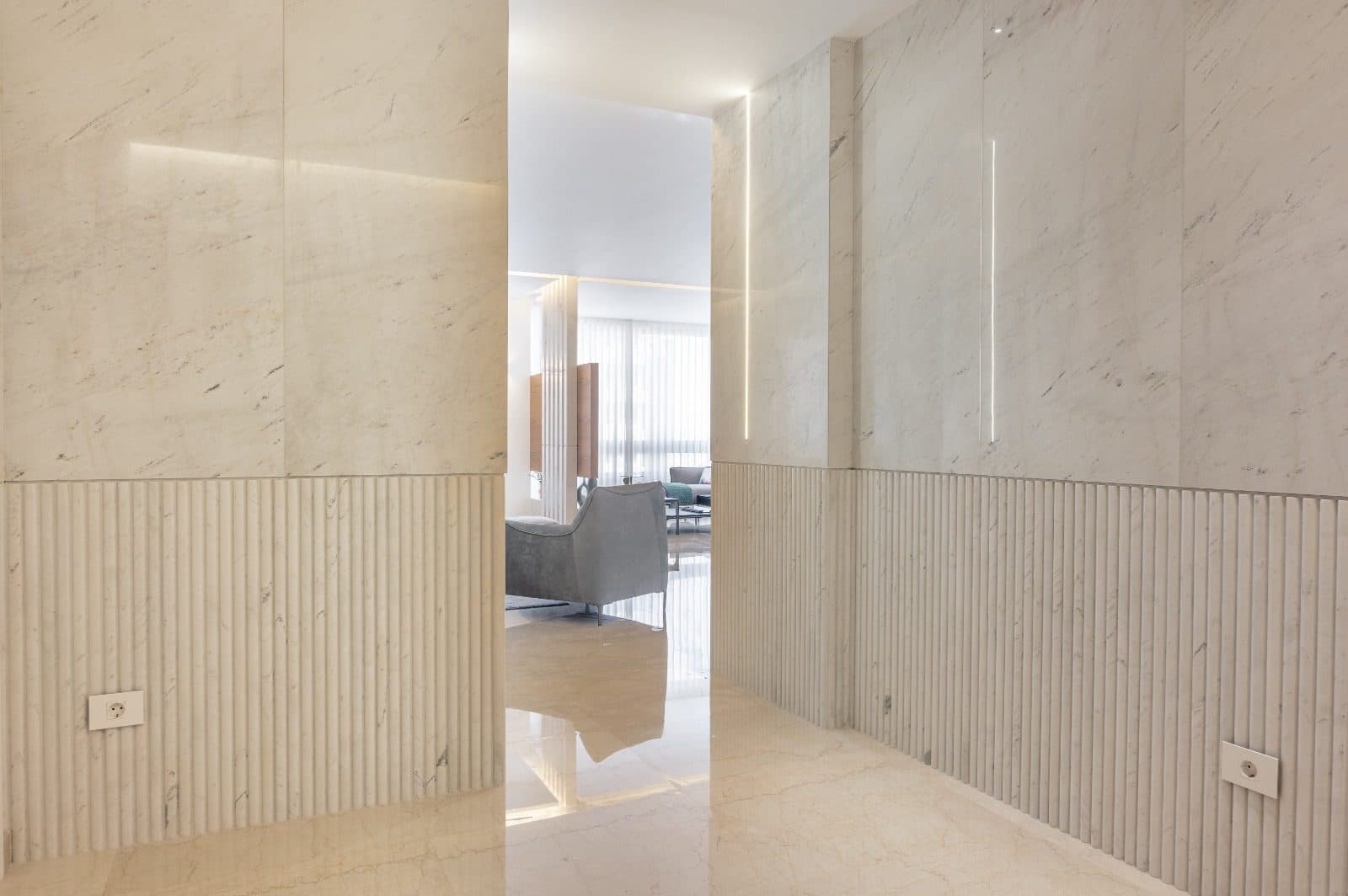
Lebanon's summers are long, bright and hot, and the floor takes the worst of it. A surface that bakes in the afternoon sun, fades after a few seasons or feels uncomfortable underfoot is a poor investment. Natural stone solves this better than almost any other material: chosen well, it stays cooler, holds its colour and lasts for generations. At Zein Group we have supplied stone for homes across Lebanon and the diaspora since 1989, and flooring for the heat is one of the questions we are asked most.
Why heat is hard on a floor
Strong, direct sun does three things to a floor. It heats the surface so it becomes uncomfortable to walk on barefoot. It drives expansion and contraction as the material warms by day and cools at night, which can loosen poorly fitted floors over time. And it fades colour — many synthetic and printed finishes lose their tone after a few summers of ultraviolet exposure.
Natural stone answers all three. Its colour is mineral, not printed, so it does not fade in sunlight. It is dimensionally stable when properly laid. And — with the right colour and finish — it can stay genuinely cool underfoot.
What to look for in a hot-climate floor
- Colour: Light, pale stone reflects more sunlight and absorbs less heat than dark stone, so it stays cooler. A white or cream marble floor will always be more comfortable in summer than a near-black one.
- Density: Denser, harder stones such as granite resist wear, scratching and the daily stress of expansion and contraction.
- Finish: A honed (matt) or textured finish stays cooler to the touch and is less slippery underfoot than a high polish — useful around pools and on terraces.
- Durability: The floor should keep its surface and its colour through years of strong sun and foot traffic.
- Maintenance: It should be straightforward to clean and, where needed, easy to re-seal.
These are the qualities we weigh when we help a client choose stone for a sunny villa, a terrace or a rooftop in Beirut or abroad.
The best natural stones for hot climates
Light marble
Marble is a metamorphic stone — limestone recrystallised under heat and pressure — with flowing mineral veins and a cool, refined surface. Pale marbles such as the classic whites and creams are an excellent choice for hot interiors: their light colour reflects heat, and the stone itself feels cool to the touch even on the hottest day.
Marble is calcite-based, which means it is porous and can etch if it meets acids such as lemon, vinegar or some cleaning products. For flooring this is rarely an issue, but the stone should be sealed and cleaned with pH-neutral products. A honed finish hides wear and stays cooler than a high polish. Marble is best kept for indoor floors and shaded terraces rather than open, high-traffic outdoor paving.
Best for: Indoor floors, entrance halls, staircases and shaded terraces.
Travertine
Travertine is a form of limestone with a warm, earthy palette of creams, beiges and walnut tones. Its pale colour keeps it cool underfoot, and a tumbled or honed travertine surface offers natural grip — which is why it is a long-standing favourite for terraces, courtyards and the areas around a pool. Like all limestone-family stones it is porous and benefits from sealing.
Best for: Terraces, courtyards, poolside paving and indoor-outdoor living areas.
Granite
Granite is an igneous stone and one of the hardest, densest materials you can put on a floor. It is highly resistant to scratching, wear and the stress of daily heat cycles, and it is far less porous than marble or travertine, so it needs little maintenance. Granite comes in a wide range of colours; for a hot climate, lighter granites stay cooler, while darker ones bring drama but absorb more heat.
Best for: High-traffic floors, outdoor paving and exposed areas that take the full sun.
Colour and finish: the two decisions that matter most
Two choices do more than anything else to keep a stone floor cool. The first is colour: light stone reflects sunlight and stays noticeably cooler than dark stone, so pale marble, cream travertine and light granite are the natural picks for a hot climate. The second is finish: a honed or textured surface stays cooler underfoot and is less slippery than a mirror polish, which matters on terraces and around water. Get these two right and even Lebanon's fiercest July sun is comfortable underfoot.
Caring for stone in the heat
Natural stone is low-maintenance, but a little care keeps it at its best:
- Sweep and clean regularly with pH-neutral products — avoid acidic cleaners such as vinegar or lemon, which can etch marble and travertine.
- Seal porous stones such as marble and travertine on installation, and re-seal periodically; granite needs sealing far less often.
- Use a honed or textured finish on sun-exposed terraces for grip and a cooler surface.
- Lay the floor properly, with appropriate joints, so it can expand and contract through the seasons.
- Address any chip or stain early rather than letting it set.
Why choose Zein Group
Zein Group has been Lebanon's house of stone since 1989. We keep more than 100 slabs in our Beirut showroom, so you can see full sheets of marble, travertine and granite in daylight and judge colour, veining and finish for yourself before you commit. We supply clients across Lebanon and the diaspora, and we help match the right stone to how — and where — it will be used.
Browse our collection to see the stones we carry, or contact us to talk through flooring for a specific room, terrace or project.
Frequently asked
- What is the best natural stone flooring for a hot climate?
- Light-coloured marble, travertine and granite are all excellent. Pale stone reflects heat and stays cooler underfoot, granite offers the greatest hardness and lowest maintenance, and travertine with a honed or tumbled finish is ideal around pools and on terraces. Colour and finish matter more than the stone type alone.
- Does natural stone really stay cooler than other floors in summer?
- Light, reflective stone such as pale marble and cream travertine absorbs less sunlight than dark surfaces and feels cool to the touch, especially indoors and in shade. A honed or matt finish stays cooler underfoot than a high polish. Dark stone in full sun will get hot, so colour choice is key.
- Will a stone floor fade in strong sunlight?
- No. The colour in natural stone is mineral and runs through the material, so it does not fade in ultraviolet light the way printed or synthetic finishes can. This is one of the main reasons stone outlasts other flooring in a sunny climate.
- Does stone flooring need much maintenance in a hot climate?
- Very little. Clean with pH-neutral products and avoid acids like vinegar or lemon. Porous stones such as marble and travertine should be sealed on installation and re-sealed periodically; granite is denser and needs sealing far less often.
See it in the showroom.
Browse over a hundred natural stones as full slabs in Beirut, or ask our team for guidance on your project.
Keep reading