Design
Creative Marble Uses Beyond Floors and Countertops
27 March 2026 · 7 min read
Marble is far more than flooring and worktops. Used as feature walls, furniture, tables, fireplace surrounds, lighting and sculptural art objects, it becomes the centrepiece of a room. Because marble is a porous, calcite-based stone that etches with acid and takes a high polish, the best creative applications play to its beauty while respecting its care needs.
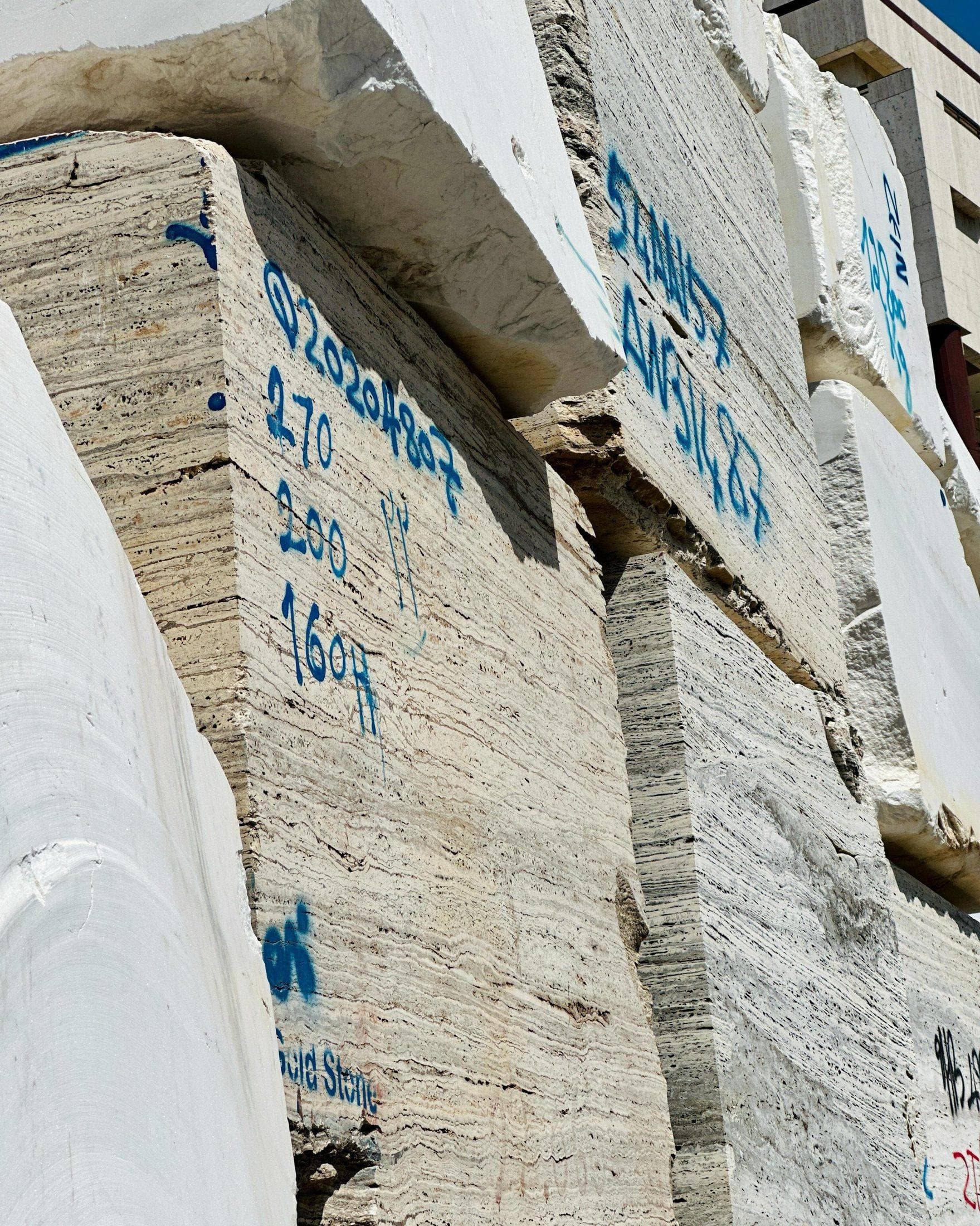
Most people meet marble underfoot or on a kitchen worktop. But that is only the beginning. In the hands of architects, designers and stone craftsmen, marble becomes a feature wall that anchors a room, a table that doubles as sculpture, a fireplace surround, a lamp that glows, or a one-off art object. The point of this guide is simple: to show where marble truly shines beyond floors and countertops — and how to use it well, honestly, with its real nature in mind.
First, what marble actually is
Marble is a metamorphic rock — limestone recrystallised under heat and pressure over millions of years — which gives it its flowing veins and the ability to take a high, mirror-like polish. It is also a calcite-based stone, which means it is porous and reactive to acid. Wine, citrus, vinegar and many cleaning products will etch the surface, leaving a dull mark, and spills can stain unsealed stone. None of this makes marble fragile; it simply means marble is a material to be understood rather than abused.
Knowing this changes how you use marble creatively. The most successful pieces lean into what marble does beautifully — depth of veining, sculptural mass, a polished or honed glow — and place it where its character is celebrated rather than fought. The sections below are organised around exactly that.
Feature walls: the room's anchor
A single marble wall can do what no paint or wallpaper can. Book-matching — opening two adjacent slabs like a butterfly so the veins mirror each other — turns a wall into a piece of natural art, with movement that draws the eye and never repeats. It works behind a bed, framing a fireplace, as a feature wall in an entrance, or wrapping the wall of a powder room where a small space can carry a bold gesture.
- Book-matched headboard walls that make a bedroom feel like a suite
- Entrance and stair walls that set the tone the moment you arrive
- Powder-room walls, where one dramatic slab transforms a tiny room
- Bar and reception backdrops in hospitality and commercial spaces
Because a feature wall is vertical and rarely touched, it is one of the most forgiving creative uses of marble — etching and staining are far less of a concern than on a worktop. It is the perfect place to choose a bold, heavily veined slab you might hesitate to put on a kitchen surface.
Furniture and tables: where mass becomes sculpture
Marble furniture reads as both function and sculpture. A solid marble dining or coffee table grounds a room, and the cool weight of the stone is part of its appeal. Designers pair marble with slim metal, dark timber or glass to balance its mass — a white or pale marble top on a fine black-metal base is a clean, modern pairing that flatters almost any interior.
- Dining and coffee tables with solid or thick-edged marble tops
- Side and console tables treated as small sculptural objects
- Shelving and ledges faced with marble panels for a slim, rich line
- Plinths and pedestals that display art — or become the art themselves
One honest note: a marble dining or coffee table is a beautiful object, but it is still marble. Seal it, use coasters, and wipe spills quickly — especially wine, citrus and anything acidic — to keep etching at bay. Many people embrace the soft patina marble develops over years of use; others prefer to keep it pristine. Decide which camp you are in before you choose a polished or a more forgiving honed finish.
A note on finishes
A polished finish gives the deepest colour and a reflective sheen but shows etch marks more readily. A honed (matt) finish is softer, more contemporary, and hides the small dulls of daily life better — often the wiser choice for a table or any surface that gets touched. Choosing the finish is as important as choosing the stone.
Fireplace surrounds: warmth and ceremony
Marble has framed fireplaces for centuries, and for good reason — it lends a hearth a sense of permanence and ceremony. A carved or clean-lined marble surround becomes the focal point of a living room, and the natural veining catches firelight beautifully.
Here, accuracy matters. Marble is not heat-proof and is not a heat-functional material — direct, sustained high heat can scorch or thermally shock natural stone. It belongs on the surround and mantel, set at a safe distance from the firebox per the fireplace manufacturer's clearances, never as the inner lining that takes direct flame. Used correctly, it is one of the most evocative ways to bring marble into a home.
Lighting and translucent objects
Light and stone make a quietly spectacular pairing. Cut thin and lit from within, marble — and especially translucent stones such as onyx — can glow, revealing depth and colour you never see in reflected light. Designers use this for table lamps, pendant shades, illuminated panels and bathroom niches.
- Marble and onyx table lamps that turn a side table into a soft light source
- Backlit panels behind a bar, a bath or a bed
- Illuminated niches and shelves that make the stone itself the fixture
Most marble is opaque, so the dramatic backlit glow is mainly the domain of translucent stones — if a luminous effect is your goal, ask us about onyx and the paler, thinner marbles that transmit a little light. See the difference between the two in our marble vs onyx guide.
Art objects and bespoke pieces
Sculptors have carved marble since antiquity because it holds the finest detail and ages with grace. That same quality lives on in smaller, more personal pieces: bowls, trays, bookends, vases, chess sets, candle holders and bespoke commissions made from a single offcut of a slab you love. These are where marble becomes intimate — an object you handle, not just a surface you walk on.
Bespoke work is also where stone craftsmanship earns its keep. A skilled fabricator can match veins across a join, mitre an edge so a tabletop looks carved from one solid block, or shape a basin from a single piece. The result is unrepeatable — your piece exists nowhere else, because no two slabs of natural stone are alike.
Choosing the right stone for a creative piece
Not every marble suits every idea. A few guiding principles:
- Match the stone to the use. Bold, heavily veined slabs belong on walls, mantels and art objects where they are admired, not scrubbed. Calmer, more uniform stones wear daily handling better.
- Choose the finish deliberately. Honed for surfaces that get touched; polished for vertical and decorative pieces where depth of colour matters most.
- Plan for veining. For book-matched walls or matched tabletops, the slabs must be selected together, from the same block — something to settle before fabrication begins.
- Respect marble's nature. Seal it, clean it with pH-neutral products, and keep acids away. This is the single biggest factor in how a piece ages.
Used well, marble does not merely decorate a room — it gives it a heart that everything else is arranged around.
See it in person
Photographs only go so far with natural stone — veining, scale and the way light moves across a polished surface are things you have to stand in front of. At our Beirut showroom you can walk among full slabs, see book-matched pairs opened side by side, and hold thinner pieces up to the light. Founded in 1989, Zein Group keeps over a hundred slabs in stock, so there is real material to choose from rather than a sample chip.
Browse our marble collection to start gathering ideas, then contact us to talk through a feature wall, a bespoke table or a one-off piece. Whether the project is a single fireplace surround or an entire interior, we will help you match the right stone — and the right finish — to how it will actually be used and lived with.
Frequently asked
- Can I use marble for a dining or coffee table?
- Yes, and it makes a beautiful, sculptural piece. Bear in mind that marble is porous and etches with acids, so seal it, use coasters, and wipe spills promptly. A honed (matt) finish hides everyday marks better than a high polish, and many people come to love the soft patina marble develops over time.
- Is marble safe to use around a fireplace?
- As a surround and mantel, yes — marble has framed fireplaces for centuries. But it is not heat-proof and should never line the firebox or take direct flame; keep it at the manufacturer's specified clearance from the heat source. Treat it as a decorative frame, not a heat-functional surface.
- Which marble is best for a backlit or glowing feature?
- Most marble is opaque, so it will not glow when lit from behind. For a true luminous, backlit effect, translucent onyx and a few very pale, thin marbles are the materials to use. We can show you which stones transmit light at the showroom.
- How do I keep a creative marble piece looking its best?
- Seal the stone, clean it only with pH-neutral products, and avoid acidic cleaners such as vinegar and lemon, which etch the surface. Wipe spills quickly, and choose a honed finish for anything that gets handled regularly. With sensible care, a marble piece can look beautiful for decades.
See it in the showroom.
Browse over a hundred natural stones as full slabs in Beirut, or ask our team for guidance on your project.
Keep reading