Projects
Marble Table Tops for Cafes & Restaurants | Zein Marble
6 March 2026 · 6 min read
Marble gives a cafe or restaurant a sense of timeless luxury that few materials can match. But it is a natural, porous stone: it etches with acids like citrus and wine, can stain, and is not heat-proof. With the right finish, sealing and care it performs beautifully in hospitality — and for the busiest, hardest-working surfaces, granite or quartz may be the more practical choice.
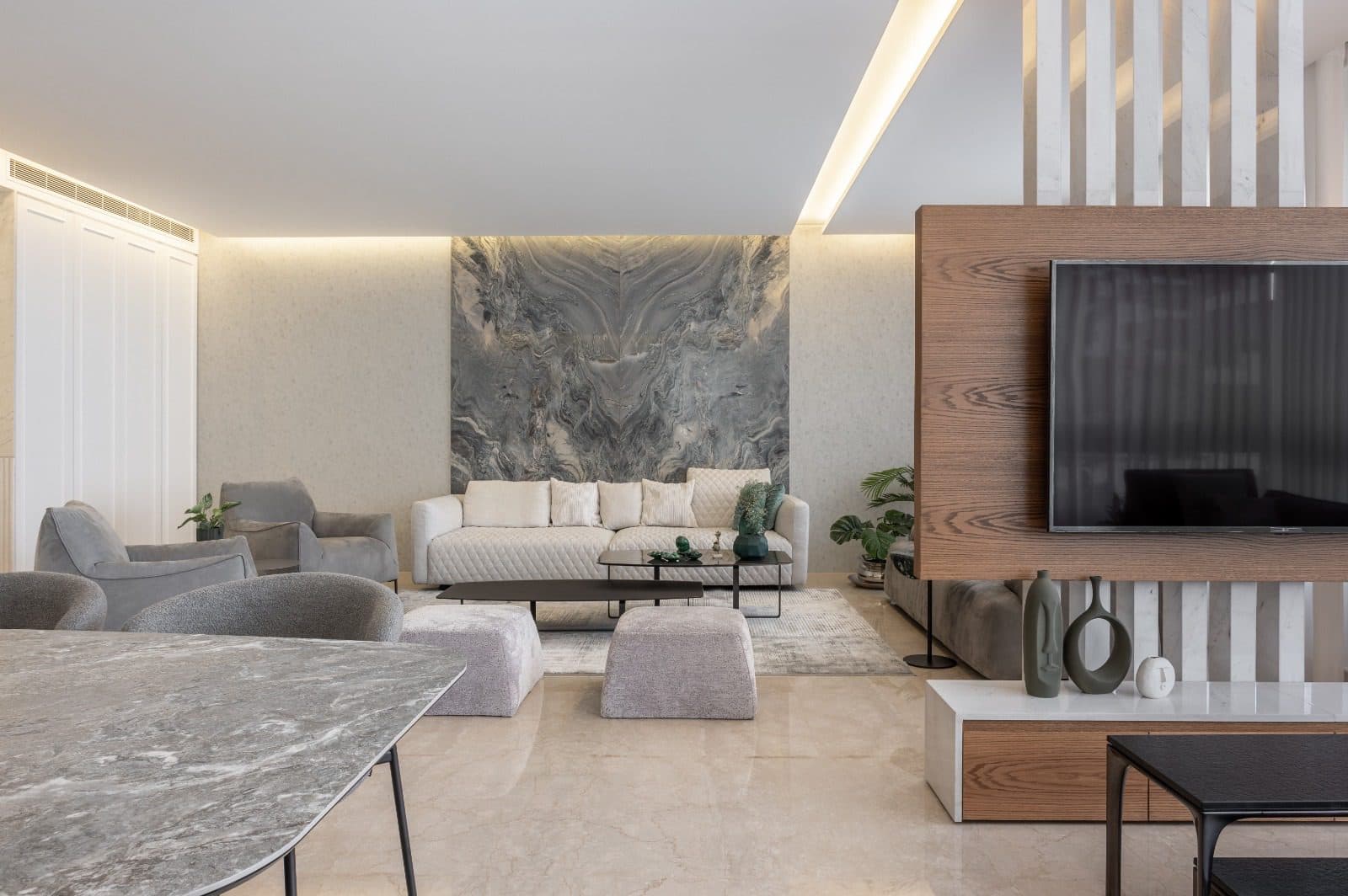
In a cafe or restaurant, the table is where guests spend their whole visit — so its surface shapes how the room feels. Marble is one of the most loved materials in hospitality because it reads as effortlessly luxurious and quietly confident. It is also a natural, porous stone with real limitations. This guide is an honest look at how marble table tops actually behave in a busy venue, how to get the best from them, and when a harder-wearing stone is the better call.
Why so many venues choose marble
Marble's appeal in hospitality is mostly about atmosphere. No two slabs are alike: the veining is formed in the rock over millions of years, so every table top is one of a kind. It photographs beautifully — a real consideration when guests share their tables on social media — and it pairs effortlessly with wood, brass, rattan or dark metal. A marble top instantly signals that a venue has invested in its space, and that perception of quality is hard to fake with a printed laminate or a moulded composite.
It is also cool to the touch and pleasant to sit at, and it suits almost any direction of design — a minimalist specialty-coffee bar, a classic brasserie or a warm neighbourhood trattoria all wear marble well. You can browse the range in our marble collection to see how different stones change the mood of a room.
The honest part: how marble really behaves
Marble is a metamorphic stone made largely of calcium carbonate, and that chemistry defines its limits. Being clear about them up front is the difference between a venue that loves its tables for years and one that regrets them within months.
Marble is porous, not antibacterial. Marble has a microscopic network of pores, so untreated it can absorb spills. It is not a self-sanitising or naturally antibacterial surface — like any food-contact surface it needs regular cleaning with the right products, and sealing helps it resist absorbing liquids.
Marble etches with acid. This is the single most important thing to understand. Acidic liquids — lemon and other citrus, wine, vinegar, tomato, fizzy drinks, even some cleaning chemicals — react with the calcium carbonate and leave dull, slightly rough marks called etches. Etching is a chemical reaction, not a stain, so it can happen even on a sealed, well-cared-for top. In a venue serving cocktails, espresso and citrus, this is a matter of when, not if.
Marble can stain. Coloured liquids such as red wine, coffee, beetroot or oil can soak in and leave a mark, especially if a spill sits for a while or the seal has worn thin. Most stains can be drawn out with a poultice, but they take effort.
Marble is not heat-proof. A hot pan or very hot dish placed straight onto marble can cause thermal shock, scorching or etching. Always use trivets, boards or mats under hot service — never set hot cookware directly on the stone.
How to make marble work in a busy venue
None of the above means marble is the wrong choice — plenty of celebrated cafes and restaurants use it happily for decades. It means you choose and treat it deliberately. A few practical moves make the difference:
- Choose a honed finish, not high polish. A honed (matte) surface hides etch marks far better than a mirror polish, because etching dulls a shine. On a polished top every etch shows; on a honed top they largely disappear into the texture.
- Lean into character. A busier, more heavily veined or darker marble disguises the small marks of daily use better than a flawless white. Many of the marks a venue accumulates simply read as patina.
- Seal it, and re-seal on a schedule. A quality impregnating sealer slows absorption and buys you time to wipe spills before they stain. Sealing does not stop etching, but it meaningfully reduces staining. Re-seal periodically based on how the stone is performing.
- Wipe spills quickly. Train staff to clear acidic and coloured spills promptly. The faster a spill is wiped, the less chance it has to stain.
- Clean with pH-neutral products only. Use warm water and a pH-neutral stone cleaner with a soft cloth. Never use vinegar, lemon, bleach or abrasive or generic kitchen sprays — many of these etch or dull marble.
- Use trivets and boards for hot and oily service. Protect against both heat and oil with a simple service standard.
- Set expectations with the team. A venue that accepts marble will develop a lived-in patina is much happier than one expecting it to stay showroom-perfect forever.
When granite or quartz is the smarter choice
For the hardest-working surfaces — a high-turnover bar, an outdoor terrace, a self-service counter, or any table where staff cannot reliably wipe spills fast — a more forgiving material often makes better commercial sense.
- Granite is a much harder, far less acid-sensitive natural stone. It resists scratching and etching far better than marble and shrugs off heavy daily use, which is why it is a hospitality workhorse. It offers a different, more granular look rather than soft marble veining.
- Quartz (engineered stone) is non-porous, highly stain-resistant and very consistent, with marble-look patterns available. It needs no sealing and tolerates acids far better than marble — though it is still not heat-proof and dislikes prolonged direct sun outdoors.
A common and effective strategy is to mix materials: marble on the feature tables and the spots guests photograph, and granite or quartz on the bar, the prep zones and the highest-turnover seats. You get the romance of marble where it matters and durability where it counts.
Choosing with Zein Group
We have supplied stone for homes and venues across Lebanon and for Lebanese clients abroad since 1989, with more than a hundred slabs on display in our Beirut showroom. Rather than promise marble is something it is not, we would rather help you choose the right stone and finish for the way your space is actually used — and be honest about the trade-offs.
Come and see full slabs in person at our showroom, compare a honed marble against a granite or quartz alternative side by side, and talk through your menu and turnover with our team. When you are ready to plan a fit-out or a refurbishment, contact us and we will help you specify table tops that look the part and last.
Frequently asked
- Are marble table tops practical for a busy restaurant?
- They can be, with the right choices. Marble etches with acids and is not heat-proof, so for high-turnover surfaces a honed finish, regular sealing, pH-neutral cleaning and trivets are essential. For the very hardest-working spots — busy bars, terraces, self-service counters — granite or quartz is often the more practical option.
- Is marble hygienic and antibacterial?
- Marble is not naturally antibacterial, and it is porous rather than non-porous. Like any food-contact surface it needs regular cleaning with pH-neutral products, and sealing helps it resist absorbing liquids. Cleaned and sealed properly, it is a perfectly suitable hospitality surface.
- Will marble get marked, and can the marks be removed?
- Yes — acidic spills such as citrus, wine and vinegar cause dull etch marks, and coloured liquids can stain. Stains can often be drawn out with a poultice, and light etching can sometimes be re-honed or polished by a professional. A honed finish and characterful veining hide everyday marks far better than a high-polish white.
- Can I put hot plates and pans on a marble table top?
- No. Marble is not heat-proof, and hot cookware can scorch or etch it or cause thermal shock. Always use trivets, boards or mats under hot dishes and pans, and never place them directly on the stone.
See it in the showroom.
Browse over a hundred natural stones as full slabs in Beirut, or ask our team for guidance on your project.
Keep reading